

Software engineers and designers
research, design, evaluate, integrate and maintain software applications, technical environments, operating systems, embedded software, information warehouses and telecommunications software.
On This Page

Full NOC Description
Main Duties
- This group performs some or all of the following duties:
- Collect and document users' requirements and develop logical and physical specifications
- Research, evaluate and synthesize technical information to design, develop and test computer-based systems including mobile applications
- Develop data, process and network models to optimize architecture and to evaluate the performance and reliability of designs
- Plan, design and coordinate the development, installation, integration and operation of computer-based systems including mobile applications
- Assess, test, troubleshoot, document, upgrade and develop maintenance procedures for operating systems, communications environments and applications software
- May lead and coordinate teams of information systems professionals in the development of software and integrated information systems, process control software and other embedded software control systems.
Also Known As
- application architect
- computer software engineer
- embedded software designer
- embedded software engineer
- software architect
Employment Requirements
- A bachelor's degree, usually in computer science, computer systems engineering, software engineering or mathematics or Completion of a college program in computer science is usually required.
- A master's or doctoral degree in a related discipline may be required.
- Licensing by a provincial or territorial association of professional engineers is required to approve engineering drawings and reports and to practise as a Professional Engineer (P.Eng.).
- Engineers are eligible for registration following graduation from an accredited educational program, three or four years of supervised work experience in engineering, and passing a professional practice examination.
- Experience as a computer programmer is usually required.
Provincial Regulation
- Provincially Regulated: Yes
The following graph shows the percentage of men and women working in this occupation in New Brunswick.
Data legend
The following graph shows the breakdown of all persons working in this occupation in New Brunswick by age group.
Data legend
The following graph shows the breakdown of all persons working in this occupation in New Brunswick by highest level of education achieved.
Data legend
The following graph shows the industry groups in which the largest shares of persons working in this occupation in New Brunswick are employed. Small percentages for all top three industry groups may suggest employment for this occupation is widely distributed amongst many industry groups.
Data legend
The following graph shows the breakdown of all persons employed in this occupation in New Brunswick by which economic region they reside in.
Data legend
Economic Regions
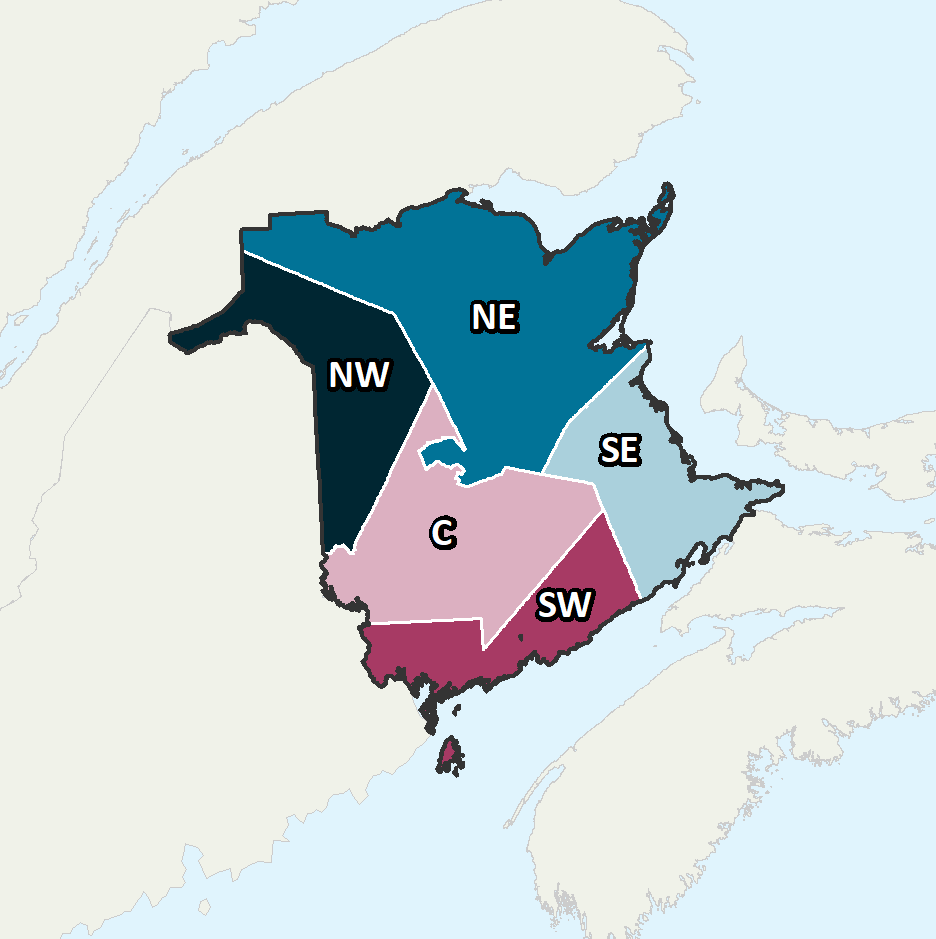
The following map displays New Brunswick’s five economic regions. An economic region (ER) is a grouping of counties, created as a standard unit for analysis of regional economic activity across Canada.
The following graph shows the average salary of all persons employed in this occupation in each of New Brunswick’s five economic regions.
Data legend
Economic Regions
The following map displays New Brunswick’s five economic regions. An economic region (ER) is a grouping of counties, created as a standard unit for analysis of regional economic activity across Canada.
The following represents the median hourly wage of all persons employed in this occupation in each of New Brunswick’s five economic regions.
The following shows the average salary of everyone who worked full-time and year-round in this occupation across each of the Atlantic Provinces and nationally.
The following represents the number of job openings that are expected to occur in this occupation over the next three and ten years respectively, broken down by openings expected to result from growth (“new jobs”) and openings expected to result from attrition (death and retirements).
Share this page
No endorsement of any products or services is expressed or implied.