
Data scientists
use technologies like machine learning and predictive modelling to identify trends, scrape information from unstructured data sources and provide automated recommendations.
On This Page
Full NOC Description
Main Duties
- This group performs some or all of the following duties:
- Implement cutting-edge techniques and tools in machine learning, deep learning and artificial intelligence to make data analysis more efficient
- Perform large-scale experimentation to identify hidden relationships between variables in large datasets
- Create advanced machine learning algorithms such as regression, simulation, scenario analysis, modeling, clustering, decision trees and neural networks
- Prepare and extract data using programming language
- Implement new statistical, machine learning, or other mathematical methodologies to solve specific business problems
- Visualize data in a way that allows a business to quickly draw conclusions and make decisions
- Develop artificial intelligence models and algorithms and implement them to meet the needs of the organization
- Coordinate research and analysis activities using unstructured and structured data and use programming to clean and organize data
Also Known As
- data scientist
- machine learning engineer
- machine learning specialist
- quantitative analyst
Employment Requirements
- A bachelor's degree in statistics, mathematics, computer science, computer systems engineering or a related discipline or completion of a college program in computer science is usually required.
- A master's or doctoral degree in machine learning, data science, or a related quantitative field is usually required.
- Experience in programming is usually required.
- Experience in statistical modelling and machine learning is usually required.
Provincial Regulation
Not Provincially Regulated
The following graph shows the percentage of men and women working in this occupation in New Brunswick.
Data legend
The following graph shows the breakdown of all persons working in this occupation in New Brunswick by age group.
Data legend
The following graph shows the breakdown of all persons working in this occupation in New Brunswick by highest level of education achieved.
Data legend
The following graph shows the industry groups in which the largest shares of persons working in this occupation in New Brunswick are employed. Small percentages for all top three industry groups may suggest employment for this occupation is widely distributed amongst many industry groups.
Data legend
The following graph shows the breakdown of all persons employed in this occupation in New Brunswick by which economic region they reside in.
Data legend
Economic Regions
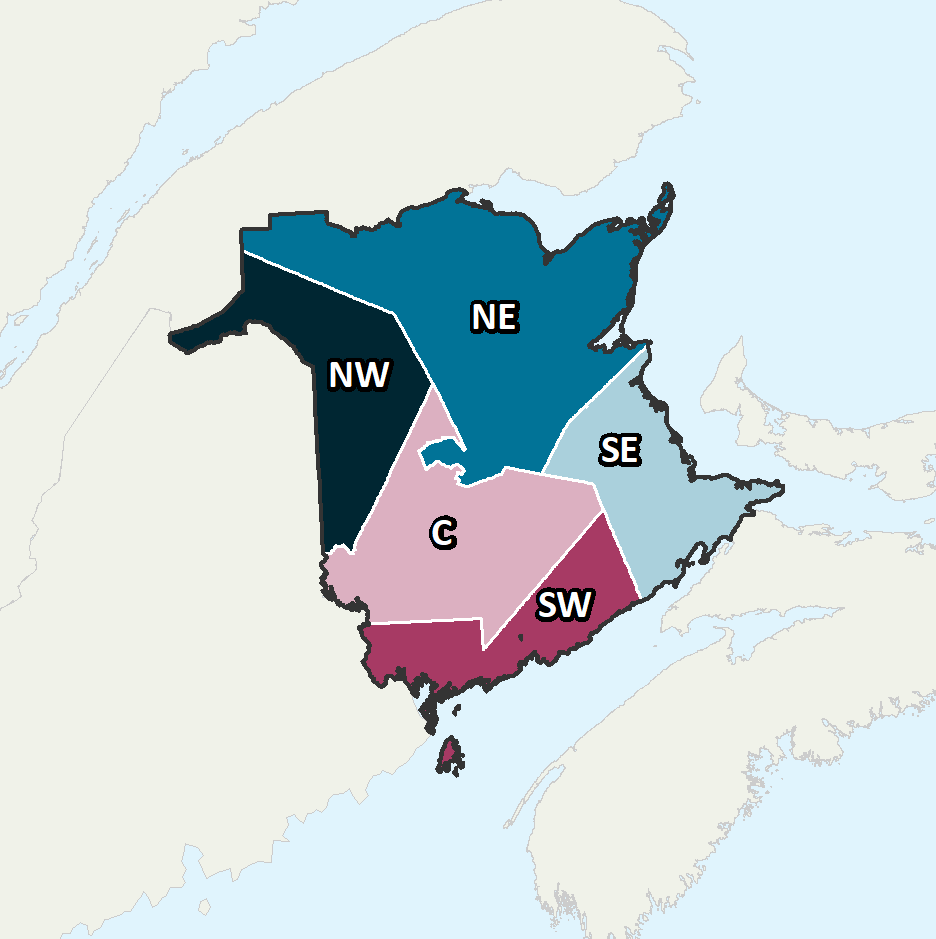
The following map displays New Brunswick’s five economic regions. An economic region (ER) is a grouping of counties, created as a standard unit for analysis of regional economic activity across Canada.
The following graph shows the average salary of all persons employed in this occupation in each of New Brunswick’s five economic regions.
Data legend
Economic Regions
The following map displays New Brunswick’s five economic regions. An economic region (ER) is a grouping of counties, created as a standard unit for analysis of regional economic activity across Canada.
The following represents the median hourly wage of all persons employed in this occupation in each of New Brunswick’s five economic regions.
The following shows the average salary of everyone who worked full-time and year-round in this occupation across each of the Atlantic Provinces and nationally.
The following represents the number of job openings that are expected to occur in this occupation over the next three and ten years respectively, broken down by openings expected to result from growth (“new jobs”) and openings expected to result from attrition (death and retirements).
Share this page
No endorsement of any products or services is expressed or implied.