

Air traffic controllers and related
- Air traffic controllers and related occupations
authorize and direct air traffic within assigned airspace, control moving aircraft and service vehicles at airports, and provide pilots with flight information needed for aviation safety.
On This Page
Full NOC Description
Main Duties
- This group performs some or all of the following duties:
- Air traffic controllers
- Control flow of air traffic within assigned airspace using radar monitors, radio and other communication equipment and visual references
- Issue aircraft takeoff and landing instructions to pilots and relay meteorological, navigational and other information to pilots in flight
- Maintain radio and telephone contact with adjacent control towers, terminal control units and other area control centres, and coordinate movement of aircraft into adjoining areas
- Alert airport emergency services when aircraft are experiencing difficulties and report missing aircraft to search and rescue services
- Direct activities of all moving aircraft and service vehicles on or near airport runways.
- Flight service specialists
- Provide pre-flight information concerning current and forecast weather conditions, radio frequencies, terrain, airports and related data to assist pilots in preparation of flight plans
- Check flight plans for completeness and accuracy and forward flight plans to air traffic services facility
- Respond to radio calls from aircraft preparing for takeoff or landing and supply information such as weather conditions, wind speed and direction and presence of local air traffic
- Support air traffic control operations by relaying radio requests for flight clearances, arrival and departure information and position reports
- Alert airport emergency services of aircraft experiencing difficulties and initiate communication searches when aircraft become overdue
- Observe, record and report weather conditions at airports.
- Flight dispatchers
- Analyze environmental conditions and assess aircraft for load and fuel capacity and other factors to determine flight routes
- Brief flight crew before takeoff on weather conditions, status of navigational facilities and airports while on route
- Co-sign flight authorization with aircraft captain
- Monitor progress of flight and communicate as required with aircraft during flight
- Delay or cancel flights if conditions warrant
- Prepare and maintain flight plans, flight logs and other reports.
Also Known As
- air traffic controller (ATC)
- airport air traffic controller
- enroute air traffic controller
- flight dispatcher
- flight service specialist (FSS)
Employment Requirements
- Completion of secondary school is required.
- A basic radio telephone operator's licence is required.
- Air traffic controllers and flight service specialists require completion of a NAV Canada training program which includes structured in-class and on-the-job training.
- Air traffic controllers require an air traffic controller's licence.
- Flight dispatchers may require experience in air traffic control or flight operations and may require a private pilot's licence.
Provincial Regulation
Not Provincially Regulated
The following graph shows the percentage of men and women working in this occupation in New Brunswick.
Data legend
The following graph shows the breakdown of all persons working in this occupation in New Brunswick by age group.
Data legend
The following graph shows the breakdown of all persons working in this occupation in New Brunswick by highest level of education achieved.
Data legend
The following graph shows the industry groups in which the largest shares of persons working in this occupation in New Brunswick are employed. Small percentages for all top three industry groups may suggest employment for this occupation is widely distributed amongst many industry groups.
Data legend
The following graph shows the breakdown of all persons employed in this occupation in New Brunswick by which economic region they reside in.
Data legend
Economic Regions
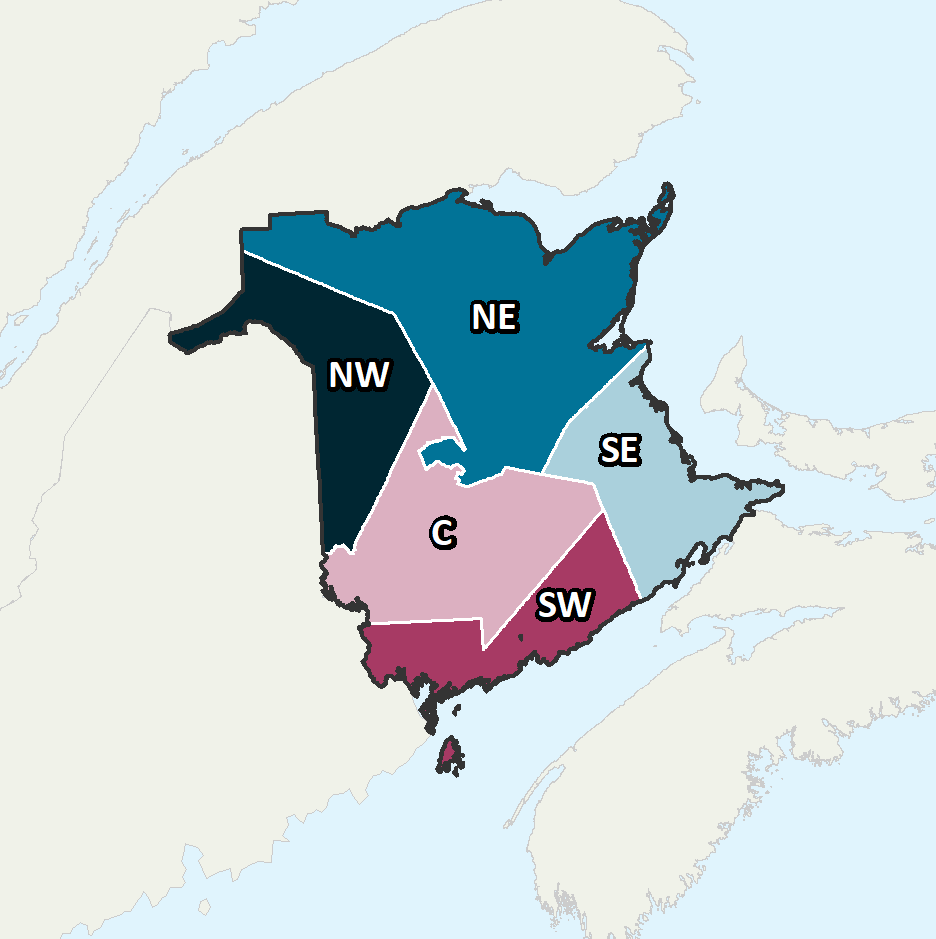
The following map displays New Brunswick’s five economic regions. An economic region (ER) is a grouping of counties, created as a standard unit for analysis of regional economic activity across Canada.
The following graph shows the average salary of all persons employed in this occupation in each of New Brunswick’s five economic regions.
Data legend
Economic Regions
The following map displays New Brunswick’s five economic regions. An economic region (ER) is a grouping of counties, created as a standard unit for analysis of regional economic activity across Canada.
The following represents the median hourly wage of all persons employed in this occupation in each of New Brunswick’s five economic regions.
The following shows the average salary of everyone who worked full-time and year-round in this occupation across each of the Atlantic Provinces and nationally.
The following represents the number of job openings that are expected to occur in this occupation over the next three and ten years respectively, broken down by openings expected to result from growth (“new jobs”) and openings expected to result from attrition (death and retirements).
Share this page
No endorsement of any products or services is expressed or implied.