

Funeral directors and embalmers
Funeral directors coordinate and arrange all aspects of funeral services. Embalmers prepare the remains of deceased persons for public visitation and burial.
On This Page
Full NOC Description
Main Duties
- This group performs some or all of the following duties:
- Funeral directors
- Consult with the family of the deceased regarding the nature of the funeral service, the disposition of the remains and funeral costs
- Transfer, or arrange for the transfer of, the remains from the place of death to the funeral home
- Inform survivors of benefits for which they may be eligible
- Issue death notices to newspapers
- Oversee the preparation of the remains, plan and schedule funeral services, coordinate burials and cremations and complete legal documents
- Discuss and negotiate prearranged funerals with clients
- Manage funeral home operations including hiring and directing staff, maintaining financial records, preparing accounts and ordering merchandise
- Supervise embalmers, funeral home attendants and other funeral home staff
- May perform same duties as embalmers.
- Embalmers
- Preserve, sanitize and prepare human remains for funeral services
- Perform cosmetic and restorative work on human remains
- Supervise funeral home attendants and other funeral home staff.
Also Known As
- apprentice embalmer
- embalmer
- funeral director
- mortician
Employment Requirements
- Completion of a one- to two-year college program and a twelve- to twenty-month practical apprenticeship program during or following the educational program is usually required for funeral directors.
- Completion of a two- to three-year college program and a twelve- to twenty-month practical apprenticeship program during or following the educational program or completion of a three-year college program is required for embalmers.
- Funeral directors require licensure in most provinces and territories.
- Funeral directors may be required to be licensed embalmers depending on provincial requirements.
- Embalmers require licensure in all provinces.
Provincial Regulation
- Provincially Regulated: Yes
The following graph shows the percentage of men and women working in this occupation in New Brunswick.
Data legend
The following graph shows the breakdown of all persons working in this occupation in New Brunswick by age group.
Data legend
The following graph shows the breakdown of all persons working in this occupation in New Brunswick by highest level of education achieved.
Data legend
The following graph shows the industry groups in which the largest shares of persons working in this occupation in New Brunswick are employed. Small percentages for all top three industry groups may suggest employment for this occupation is widely distributed amongst many industry groups.
Data legend
The following graph shows the breakdown of all persons employed in this occupation in New Brunswick by which economic region they reside in.
Data legend
Economic Regions
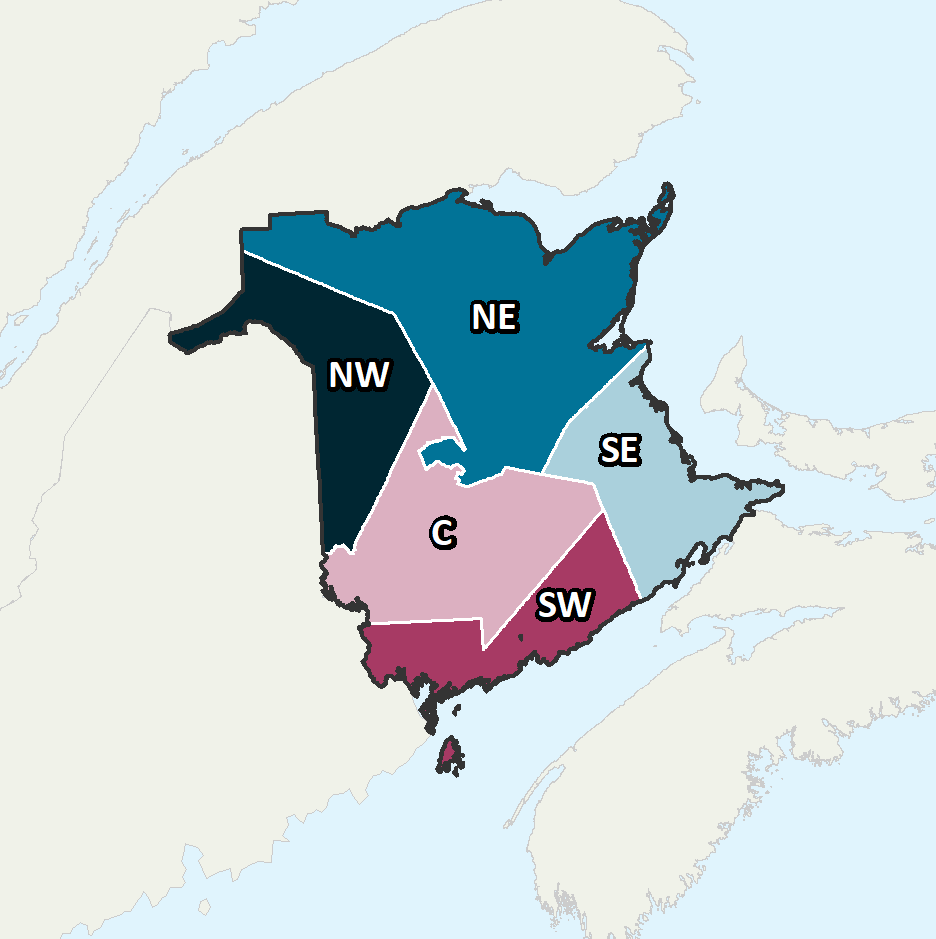
The following map displays New Brunswick’s five economic regions. An economic region (ER) is a grouping of counties, created as a standard unit for analysis of regional economic activity across Canada.
The following graph shows the average salary of all persons employed in this occupation in each of New Brunswick’s five economic regions.
Data legend
Economic Regions
The following map displays New Brunswick’s five economic regions. An economic region (ER) is a grouping of counties, created as a standard unit for analysis of regional economic activity across Canada.
The following represents the median hourly wage of all persons employed in this occupation in each of New Brunswick’s five economic regions.
The following shows the average salary of everyone who worked full-time and year-round in this occupation across each of the Atlantic Provinces and nationally.
The following represents the number of job openings that are expected to occur in this occupation over the next three and ten years respectively, broken down by openings expected to result from growth (“new jobs”) and openings expected to result from attrition (death and retirements).
Share this page
No endorsement of any products or services is expressed or implied.